
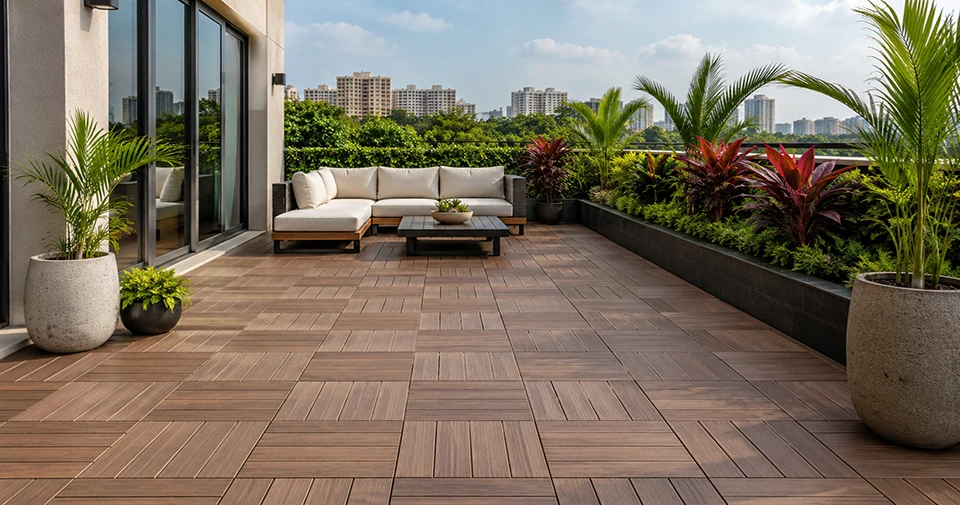
When you plan an outdoor flooring project, the real question is not only how the space will look after installation. It is also how easy that flooring will be to live with later. In Indian conditions, outdoor areas face heat, rain, dust, humidity, and regular wear. That is why more homeowners, architects, builders, and project buyers now compare WPC interlocking decking tiles with traditional deck flooring before making a decision.
Both options have their place. Traditional deck flooring has been used for years in many outdoor spaces, while WPC interlocking decking tiles have become a more modern choice for buyers who want a practical and easy-to-manage flooring solution. The right option depends on your space, design goals, and how much maintenance you are willing to handle over time.
-
-
-
-
-
-
-
-
-
-
-
-
-
-
-
- What Are WPC Interlocking Decking Tiles?
- What Is Traditional Deck Flooring?
- Why This Comparison Matters for Indian Outdoor Spaces
- WPC Interlocking Decking Tiles vs Traditional Deck Flooring: Key Differences
- Best Applications for WPC Interlocking Decking Tiles
- When Traditional Deck Flooring May Still Be Considered
- Why Many Modern Buyers Prefer WPC Interlocking Decking Tiles
- How to Choose the Right Option for Your Space
- Why Choose Treeplast WPC Interlocking Decking Tiles?
- Conclusion
-
-
-
-
-
-
-
-
-
-
-
-
-
-
What Are WPC Interlocking Decking Tiles?
WPC interlocking decking tiles are modular outdoor flooring tiles made from wood plastic composite material. They are designed to fit together through an interlocking system, which helps create a neat deck-style surface without the more involved installation process often associated with conventional flooring methods.
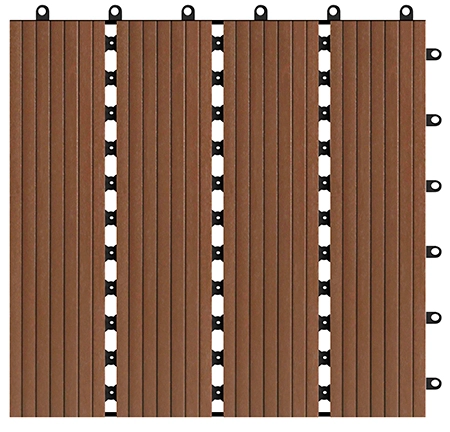
These tiles are commonly used in:
- balconies
- terraces
- garden areas
- sit-out spaces
- rooftop decks
- walkways
- outdoor seating zones
For many buyers, the biggest attraction is convenience. The interlocking format makes them easier to plan for modern outdoor upgrades, especially when the goal is to improve the look of the space without making the project too complex.
What Is Traditional Deck Flooring?
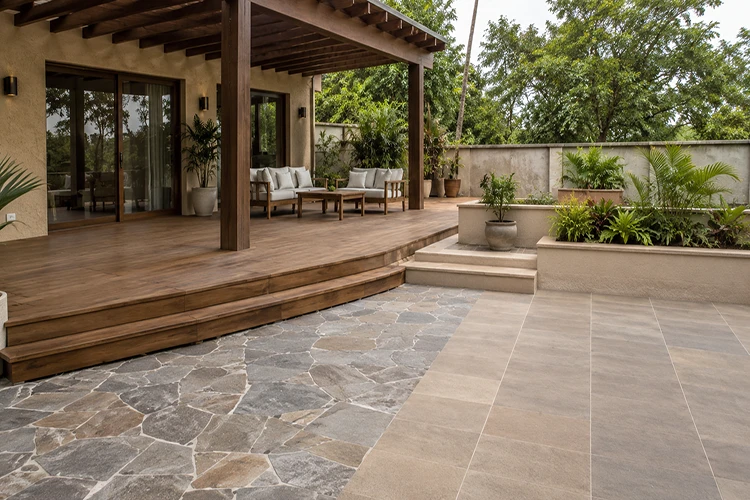
Traditional deck flooring usually refers to more conventional outdoor flooring options such as natural wood decking, stone, ceramic or vitrified outdoor tiles, and other fixed flooring materials used in exterior spaces.
These materials have been part of outdoor design for a long time because they can offer a familiar appearance and, in some cases, a more permanent structural setup. Depending on the material, traditional flooring may suit classic design styles, permanent outdoor platforms, or projects where the overall structure is being built from the ground up.
However, traditional deck flooring can vary widely in maintenance, installation effort, and day-to-day practicality. That is why comparing it with WPC interlocking decking tiles is useful before making a final choice.
Why This Comparison Matters for Indian Outdoor Spaces
Outdoor flooring in India needs to do more than look attractive. It has to handle real environmental conditions. Heat, rain, moisture, dust, and seasonal changes all affect how outdoor surfaces perform. On top of that, property owners also think about cleaning, long-term appearance, and maintenance effort.
That is why material choice matters so much. A flooring solution that looks good at the beginning but becomes difficult to maintain later may not be the best practical choice. Modern buyers are now more aware of this and want flooring that balances style with long-term usability.
WPC Interlocking Decking Tiles vs Traditional Deck Flooring: Key Differences
1) Installation Convenience
One of the biggest advantages of WPC decking tiles is ease of installation. Because of the modular interlocking design, they are often preferred for quicker outdoor upgrades and renovation-friendly applications.
Traditional deck flooring may involve more labor, more site preparation, and a longer installation process depending on the material. For buyers who want a simpler and faster upgrade, interlocking tiles often feel more convenient.
2) Maintenance
Maintenance is one of the strongest decision points in this comparison. WPC interlocking decking tiles are usually preferred by buyers who want lower-maintenance outdoor flooring.
Traditional flooring, especially natural wood or certain conventional deck materials, may need more regular attention depending on use and exposure. For many modern homeowners, easier upkeep is a major reason to consider WPC.
3) Outdoor Suitability
Both options can be used outdoors, but they perform differently depending on the setting and material type. WPC interlocking decking tiles are popular because they are designed for outdoor applications and suit spaces where practical everyday use matters.
Traditional deck flooring can still work well, but buyers often need to think more carefully about the specific material being selected and how it behaves in outdoor conditions.
4) Appearance and Design
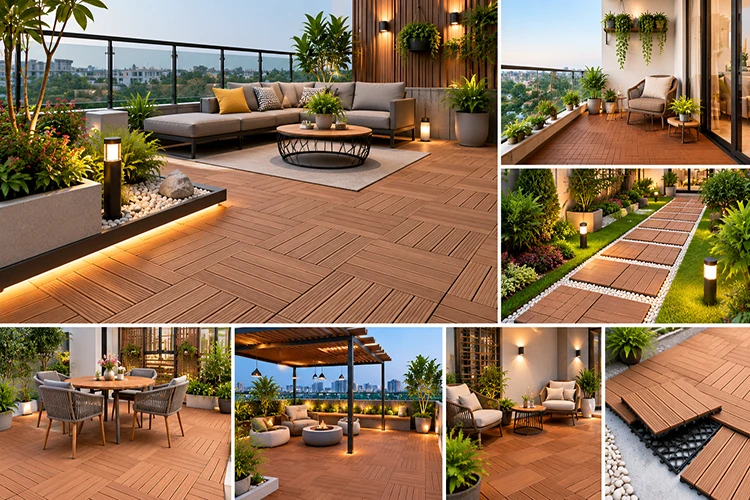
WPC interlocking decking tiles offer a modern, neat, wood-like look that works well in contemporary homes and outdoor spaces. They are especially suitable for buyers who want a deck-style appearance with a clean finish.
Traditional deck flooring may suit classic, rustic, or more conventional design themes. Stone, tile, or natural wood may still appeal to buyers who want a very specific look. So in this area, design preference plays a major role.
If design appearance is a key deciding factor, you can also explore Treeplast’s deck tile colour options to compare wood-like shades for modern outdoor spaces.
5) Practicality for Renovation
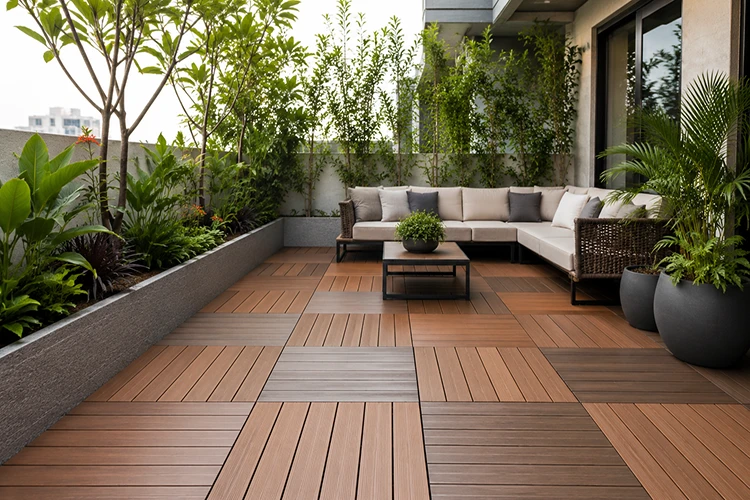
If your project is a renovation or outdoor makeover, WPC interlocking decking tiles often have an advantage. They are a practical option for refreshing balconies, terraces, and garden zones without the feel of a heavy construction project.
Traditional deck flooring may be more suitable in situations where a permanent structural flooring system is already planned from the beginning.
6) Long-Term Value
Good flooring decisions are not only about initial appearance. They are also about how manageable the flooring remains over time. WPC interlocking decking tiles often appeal to buyers who think in terms of convenience, maintenance, and modern usability.
Traditional flooring may still offer value in some projects, but long-term upkeep and repair expectations should always be considered before choosing it.
Best Applications for WPC Interlocking Decking Tiles
WPC interlocking decking tiles work especially well in spaces where appearance, practicality, and easier installation matter together.
They are commonly suitable for:
- balcony flooring
- terrace flooring
- garden pathways
- outdoor seating areas
- rooftop decks
- sit-out corners
- quick renovation projects
- decorative outdoor flooring upgrades
For these kinds of spaces, buyers often want a result that looks modern and feels manageable in everyday use.
If you want to understand the practical value in more detail, you can also explore the top benefits of WPC decking tiles for balconies, patios, and garden spaces. This can help readers connect design appeal with everyday usability.
When Traditional Deck Flooring May Still Be Considered
A balanced comparison should also recognize that traditional deck flooring may still suit certain projects.
It may be considered when:
- the project includes a permanent structural outdoor deck
- the design language is strongly traditional or material-specific
- the architect has planned a particular conventional finish
- the buyer prefers a fixed flooring system from the construction stage
This does not make traditional flooring better or worse overall. It simply means the right choice depends on the nature of the project.
Why Many Modern Buyers Prefer WPC Interlocking Decking Tiles
Many buyers now prefer WPC interlocking decking tiles because they fit modern priorities. People want outdoor spaces that look attractive but do not demand too much effort later. They also want materials that suit renovations, compact outdoor areas, and modern exterior design.
WPC interlocking decking tiles often feel like a better match for this lifestyle because they offer:
- easier installation
- lower maintenance
- a clean deck-style appearance
- better suitability for quick upgrades
- practical use in terraces, balconies, and garden areas
For buyers who value convenience as much as style, this makes a big difference.
If you want to explore this in more detail, you can also read how WPC deck tiles are a smart outdoor flooring choice for modern balconies, terraces, and garden spaces. It gives readers a clearer view of why these tiles suit today’s outdoor lifestyle needs.
How to Choose the Right Option for Your Space
Before choosing between WPC interlocking decking tiles and traditional deck flooring, ask yourself a few practical questions:
- Is this a renovation or a new build?
- Do you want faster installation or a more permanent built-in system?
- How much maintenance are you comfortable with?
- Does your design require a classic material look or a modern deck-style finish?
- Are you choosing based only on current appearance, or also on long-term practicality?
The best flooring choice is the one that matches your real use-case, not just the one that looks attractive in photos.
Why Choose Treeplast WPC Interlocking Decking Tiles?
Treeplast, as a WPC products manufacturer in India, focuses on practical and modern outdoor material solutions. For buyers looking for stylish, low-maintenance exterior flooring, Treeplast WPC decking solutions are designed to suit both residential and commercial spaces.
Why Treeplast?
- focus on modern WPC product solutions
- suitable for outdoor applications
- practical for Indian conditions
- clean and reliable finish
- support for residential and project requirements
- bulk and project enquiry support
For buyers who want outdoor flooring that combines appearance with convenience, Treeplast offers a practical direction.
Conclusion
When comparing WPC interlocking decking tiles vs traditional deck flooring, the right choice depends on your space, design preference, and maintenance expectations. Traditional flooring may still suit certain permanent or style-specific projects. But for many modern homes and outdoor upgrades, WPC interlocking decking tiles offer a more practical balance of appearance, installation convenience, and easier upkeep.


